As an event planner, low attendance is your worst nightmare.
You've spent months of your life, thousands of dollars, and countless hours setting up the best event in company history. But the day comes, and the event attendance is less than half of what you'd planned for.
The seats are empty-and the vibe is lethargic at best.
It doesn't matter how well-planned your event is; if you don't understand how to get people to show up, it will all be for nothing.
That's why in this post, we'll cover the 13 essential steps to boosting attendance at your next event.
We'll cover everything from planning it the right way, through marketing it and incentivizing signups, to running a successful and engaging event that will be the talk of your industry for years to come.
Common Reasons for Low Event Attendance
Guests may not show up to your event for all sorts of reasons. People miss flights, have childcare problems, and get sick all the time. Event marketing can be sub-par, or scheduling conflicts arise between two competing events.
On the other hand, people may show up, but your event experiences problems that cause a mass exodus.
Your microphones or speakers may glitch, the wifi may go out, or the presentation on the big screen may not play. The check-in process might go haywire and cause ridiculously long wait times to even get into the event.
Or if your event is outdoors, it might rain and ruin your plans.
Despite the number of things that can cause low event attendance, there are a few strategies you can enact to have the best chance of seeing high numbers at your next event.
They all come down to planning, marketing, and making your event as unique and engaging as possible.
Let's look at them in more detail.
Have a question?
Ask Regpack AI anything.
1. Understand Why Your Audience Wants to Attend in the First Place
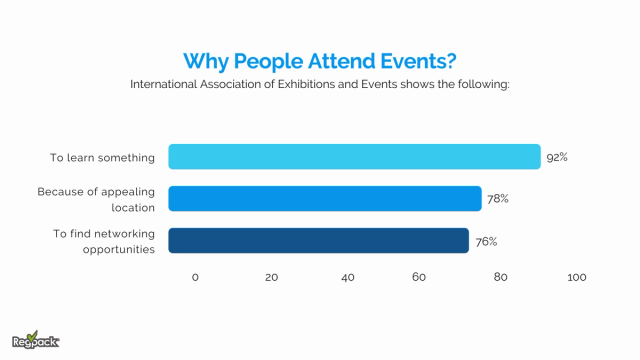
Why does your audience even want to be there? According to the International Association of Exhibitions and Events:
- 92% attend to learn something
- 78% show up because the location is appealing
- 76% take part to find networking opportunities
Provide draws that will meet those needs.
Do you have breakout sessions or social mixers that will give your attendees plenty of opportunities to mingle and network?
What about your guest speaker or educational sessions-will they give your audience that rich learning experience they crave?
As for your location, be sure to capitalize on what makes it a great place to hold an event.
Focus on your event objectives and the key results you're aiming for. What values are you promoting-and what kinds of audience members would resonate with that message?
Imagine this nightmare scenario: you plan an amazing event designed to lead decision-makers at local businesses to purchase your product. On the day itself, your event is well-attended, and you're sure you're about to break all your company's sales records.
But nothing comes of it.
You realize that your audience was made up almost entirely of retirees and college students-no one in a position to buy what you're selling.
Understanding your target audience helps you define a plan for the event that matches their motivations.
Use real data from past events, surveys, and interviews to determine a customer persona.
Don't forget to ask people in other departments within your organization for input, such as sales or customer service, to get a complete picture.
What traits such as age, income level, education, and location does this target attendee have?
Let the information you gather dictate how you market, brand, and design your event.
2. Offer Incentives for Early Registrations or Arrivals
Offering early registration discounts or early arrival perks might help boost event attendance. In fact, 64% of event planners claim early bird discounts are their most successful promotional tactic.
Consider offering a tiered discount system, with incentives such as:
- Free VIP upgrades
- Discounts for the first 100 registrants or people who share your event on social media
- Perks like front-row seating at the keynote presentation
- Group discounts or referral programs such as BOGO (buy one get one) promotions on tickets
Offering incentives shows your audience that you aren't taking them for granted and that you value their participation.
Also, people are always excited to get prizes or discounts, so you'll grab their attention (at least for a little while).
Your job after that is to keep that attention.
Related: How to Get More People Registering for Your Events
3. Donate Tickets or Organize Social Media Giveaways
It may seem counterintuitive, but sometimes giving away free tickets is better than trying to sell every last one.
Unless your show or event is in extremely high demand, the odds are good that you'll have at least a few un-purchased tickets.
Those empty seats are going to be noticeable to the audience, if only subconsciously.
Giving away tickets can have tangible benefits, too.
The more people you have in your audience, the more likely you are to sell extra offerings like concessions. If you're promoting a new service or product, that means more eyes and potential future customers.
Try the following tactics:
- Social media giveaways-Run a promotion for the first group of followers to like or share your event on social media. Use an online design tool like Placeit to create compelling social media posts to drive the right audience to your event.
- Donate a few tickets to silent auctions-Many organizations such as churches, schools, and charities look for items to auction off at their fundraisers. Giving a few tickets to an auction guarantees free advertising for you.
- Give tickets to students-Bolster your reputation by supporting the arts or local schools. Is your event a performance? Give away tickets to the local theater group. Is it an industry event? Offer free passes to enthusiastic business school students.
- Ticket giveaways on your email list-Use free tickets as an incentive to open your promotional emails. Mention the giveaway in your subject line for better open rates and engagement. Even better, tie the giveaway entry to sharing the event on social media for a little free advertising.
- Radio giveaways-Commuters build a relationship of trust with their favorite radio DJ, so hearing about an event from that DJ's lips will make them more likely to believe the event is worthwhile.
In each case, giving away free tickets generates good publicity for you and your event.
4. Send Personal Invites
While generalized marketing campaigns, advertisements, and social media promotions have their place, there's no match for personalized invitation templates sent directly to your potential attendee's email addresses.
To generate the best response, be sure to send professional and engaging emails.
Start by segmenting your audience and sending customized emails based on demographic data.
The email needs to feel personalized and relevant to each recipient.
Be sure to insert the recipient's name in the subject line or greeting ("A special invitation for you, Sally"). Whatever subject line you choose, it should catch the eye and get to the point.
The body of your message should be packed with information but short enough to read in just a minute or two.
Focus on the value your event will provide to attendees, and don't forget to include a call to action (CTA).