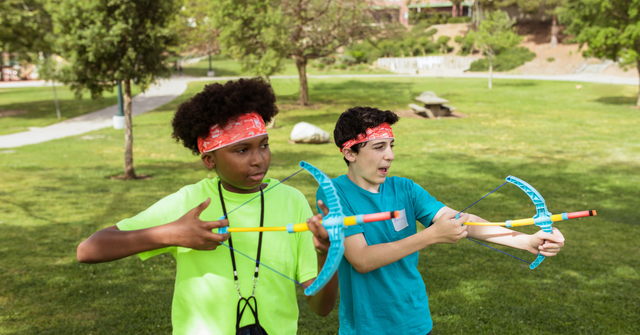
Summer camp games need three things from the office before they can run: a roster that matches who actually checked in, signed waivers for anything involving water or off-site games, and a way to reach every family the morning a plan changes. Our six games listed below are grouped by which of the three they depend on. If you’re the person who needs all three covered rather than the person running the game, this is the order that matters.
What Each Camp Game Needs From the Office
Camp games need one of three things from the office to run successfully and safely. We’ve pulled a few examples of camp clients and how their setup looks:
- A current roster: Capture the Flag and Camp Olympics both need even teams at the start and an accurate count at the end.
- A signed waiver and medical notes on file: Aqua Dodgeball and the nature scavenger hunt, plus anything else involving water or leaving the site.
- A way to message every parent that morning: Human Knot and Simon Says, the two you reach for when the forecast turns.
Group size runs from eight campers for Human Knot up to twenty or more for Capture the Flag and Camp Olympics. Simon Says works with any number, which is why our clients agree it’s a staple.
Have a question?
Ask Regpack AI anything.
Which Camp Games Need an Accurate Roster?
Team games need an accurate roster twice: once to split even sides, and once to count everyone back in at the end. A roster built from who signed up in the spring rather than who checked in this morning gives you uneven teams at the start and a number that doesn’t match at the end.
Capture the Flag
Two teams, flags, and territories to start. Capture the other team’s flag and return it to your base without getting tagged. The game encourages teamwork and sportsmanship. As long as the teams are even, any number of campers can play. Mark the dividing line with something visible from their end, like a bright cone, or a staff member can play referee and monitor the split.
Camp Olympics
A half-day of team events with points carried across all of them, ensuring all kids can showcase their physical talents. Activities like relay races and field games let your team be creative and include kids in the decisions. Build teams that mix ages so younger campers aren’t at a disadvantage; this requires a current roster and accurate attendance.
Both games start and end with counting. Teams get split from the roster, and at the end everyone gets counted back against the same list. Real-time rosters that track against check-in reports keep kids safe and reflect the real numbers.
What Paperwork Do Water and Off-Site Games Need?
Water and off-site activities need three things on file per camper before they run: swimming level and limitations, a signed waiver, and any medical notes that change what a camper can participate in. Off-site adds a fourth: emergency contacts reachable from wherever the group is that day. Collecting signed waivers inside the registration form is what keeps that from turning into a scramble the week of.
Aqua Dodgeball
Dodgeball with water guns instead of balls. Summer camps can keep their kids outside without overheating. Campers are out when they’re soaked through. Mark boundaries that allow shields and barriers, or the game is over in less than two minutes. It’s ideal for a group that already knows each other because it gets more competitive faster than most games. Double-check the list of campers who aren’t going in before the whistle blows.
Nature Scavenger Hunt
Give campers a list of things to find, like:
- a pinecone
- a smooth stone
- a yellow leaf
The first team back with the whole list wins first place. Mark paths and boundaries clearly, especially for younger kids, to keep everyone on a safe, approved path. Send a counselor with every group regardless of age. If the hunt leaves the main site, that's another permission slip on top of the one covering the rest of the day, and it's often the one missing.
What Do You Run When the Weather Turns?
Rainy-day games need almost nothing from the office except alerting every family of the change in plans before drop-off. That means getting the message to every family early in the morning.
Human Knot
Campers stand in a circle, each grabs the hand of someone across from them, and the group untangles without letting go. This game requires more communication than physical strength, and it works in a room with the tables pushed back. Groups of eight or twelve are the sweet spot; if the circle grows too big, half the circle is stuck waiting.
Simon Says
One camper gives a command, and the group should follow only the ones that start with “Simon says”. Anyone who follows the others is out. No cost, any age can play the game, and it needs very little space. Staff gets a ten-minute break to plan the rest of the day while the kids enjoy themselves.
What to Set Up Before Registration Opens
Three groups of games, three different things that had to be ready before staff could run them. All three come from the same place: what you collect at sign-up.
Collect Everything on One Form
A parent picks the session, answers medical and health questions, signs the waiver, and pays in a single flow. When split across multiple places, each requirement becomes something to chase. A family enrolling two children in different weeks should only do it once. A summer camp registration form covers the basics if you’re starting from a blank page.
Ask the Questions These Games Made You Need
Swim abilities, medication, allergies, and authorized pickup all came up in the three groups above, and all four belong on the form as required questions rather than optional ones. Optional fields come back blank on the campers you most need them for. Lock each field so families can't move forward without answering. What to ask on your camp registration forms goes through the full list.
Give Counselors a Real-Time Roster
The registration roster should match the one used at the door. Attendance gets taken against it, so the roster a counselor pulls up at the field reflects who checked in this morning. Attendance tracking keeps camper records attached to the camper profile and updates in real time, and there is more on the camp-specific case in attendance tracking software for summer camp.
Set Deposits, Payment Plans, and Discounts
Set these once, and they run in the background. Deposit information attaches to each camper profile, holds their spot, and follows the schedule. Attract early sign-ups with discounts for pre-registration applied in the form rather than by hand. The earlier spots are filled, the less stressed staff become during camp prep.
Summer Camp Games FAQ
What do camp games need from the office before they run?
A roster that matches who checked in, signed waivers for water and off-site activities, medical and allergy notes per camper, and a contact list you can message the same morning. Games that need none of these are the ones worth keeping for rainy days.
How many campers do you need for camp games?
Capture the Flag and Camp Olympics want twenty or more. Aqua Dodgeball and a scavenger hunt work from about twelve. Human Knot suits eight to twelve, and Simon Says works with any number, which makes it the reliable fallback.
What paperwork is required before a water activity at camp?
A signed waiver, a recorded swimming level for each camper, and any medical note that limits what a camper can do. Collect all three at sign-up so the list of campers staying out of the water is ready before the activity starts.
What do you do about a camper who cannot swim?
Ask at registration rather than at the water. A swimming level question on the sign-up form lets you plan a parallel activity ahead of time, so no camper gets singled out in front of the group on the day.
What paperwork do you need before an off-site camp activity?
Permission for the activity, a current emergency contact, and any medical or medication note for each camper attending. Collecting all three at sign-up for the whole session means an off-site day doesn't need its own round of forms.
What do you do if a camper's form is incomplete on the first day?
Catch it before the camper arrives rather than at the gate. Running a check on required fields a week out leaves time to chase a missing waiver or medical note, which is the difference between a phone call on Tuesday and a camper sitting out the water activity on Monday.
How do you tell families the camp schedule changed?
Message the same list the roster came from, so the contact details are the ones collected at registration rather than a spreadsheet assembled separately. A weather call made at seven in the morning has to reach families before drop-off to be worth making.
Before the Next Session Opens
Six games, three requirements behind them. A roster that matches who checked in, waivers and medical notes on file before anyone gets near the water or leaves the site, and a contact list you can reach the morning a plan changes.
None of those are game-planning problems. All three get settled at sign-up, months before a counselor is standing on a field with a clipboard. That's the reason this list stops at six rather than running to twenty-five. Another nineteen games wouldn't have changed a single one of them.
So pick the group that matches what you've already got covered, and build the next session's registration form around the one you don't.