Online purchases and subscriptions have surged over the past two decades, and recurring billing has followed into nearly every industry. Automated billing saves time and cuts the manual errors that come with chasing payments by hand, which is why business owners increasingly treat it as core infrastructure rather than a nice-to-have.
But "recurring billing" actually covers two different models: recurring payments and recurring invoices, and they are not interchangeable. This guide explains what each one is, how they differ, and how to tell which your business needs.
What Are Recurring Payments?
Recurring payments, also called subscription payments or automatic billing, are when a customer gives a business permission to withdraw a set amount from their account on a schedule, whether weekly, monthly, or annually. Once limited to gym memberships and magazines, the model now spans subscription boxes, SaaS, utilities, and streaming.
It works like this: the customer selects a plan and payment method, enters their card details once, and agrees to terms that authorize the business to charge that amount on the agreed schedule. The card is stored securely, and every future charge runs automatically.
Behind the scenes, a payment processor and merchant account move the money, seeking authorization from the customer's bank and the card network before funds transfer to the business. Some platforms build payment processing in, so you don't need to arrange a separate processor.
The model is the backbone of a fast-growing subscription economy. The global subscription market is estimated at roughly $628 billion in 2026 and is projected to keep climbing through the decade, according to Grand View Research, as more businesses adopt recurring revenue for its predictability.

What Are Recurring Invoices?
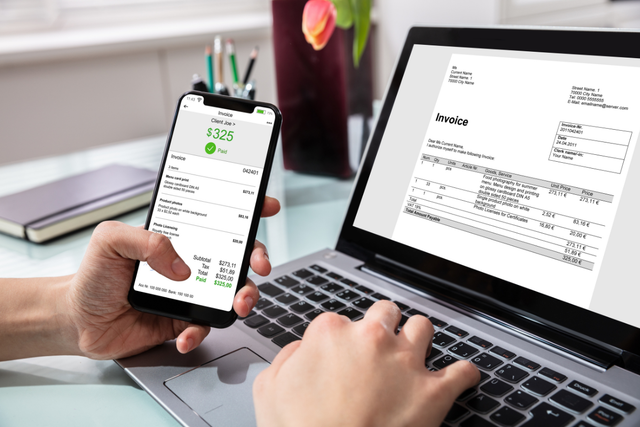
Recurring invoicing is simpler: a customer regularly orders the same products or services, and you send them the same invoice on a repeating schedule. Modern software handles the sending, so you skip the reminders and manual admin, but the key difference is that the invoice requests payment rather than collecting it automatically.
Recurring invoicing fits businesses with routine, repeatable offerings. Common examples include equipment rentals, where a company bills the same lease each cycle; subscription-based services like boxes, streaming, or SaaS; monthly service contracts such as marketing agencies or landscapers; maintenance packages for IT, vehicles, or property; and membership fees for gyms, clubs, or associations.
To set one up, you choose invoicing software with automation and customizable templates, many of which include ready-made recurring templates. Because you know the amount for each invoice ahead of time, you can schedule them to send days in advance, which lightens the load at a busy month's end and gives customers more time to process payment.
What's the Difference Between Recurring Payments and Recurring Invoices?
Both are automated, cloud-based forms of cashless billing, and both help customers avoid late fees while freeing businesses from repetitive work. Cashless payment volumes continue to climb worldwide, which is part of why both models have spread so quickly. The distinction comes down to who moves the money, and when.
Recurring payments automatically charge the customer's card on a preset schedule. The money moves on its own, directly from the customer's account to yours. Recurring invoices automatically generate and send an invoice on a set timetable, but payment is only collected when the customer acts on it, by paying the invoice or using another method the vendor accepts.
Timing is the other difference. Recurring payments happen at fixed intervals, so they suit any business charging a set amount on a regular cycle: subscriptions like meal kits and streaming, or insurers charging fixed premiums. Recurring invoices can go out whenever goods or services are delivered, so they fit businesses with slightly variable or usage-based costs, such as consulting and law firms with changing billable hours, or IT and landscaping providers with a range of monthly services.
Do You Need Recurring Payments or Recurring Invoices?
Every business wants stable, predictable monthly income, and automated billing is a direct route to it. Which model you need depends on your scope of work and what you sell. If you charge a fixed amount on a regular schedule, recurring payments are usually the better fit. If your charges vary by delivery or usage, recurring invoices give you the flexibility to bill the right amount each time. Many businesses end up needing both, depending on the mix of what they offer.
That's the case Regpack was built for: automated billing that supports both recurring payments and recurring invoicing, so you can bill clients for subscriptions, annual fees, memberships, and donations, set amounts and schedules, apply discounts, and pause, cancel, or adjust as needed.
See your numbers
Get a personalized, no-commitment savings report.
Have a question?
Ask Regpack AI anything.